

Top Government Exams for Graduates in India
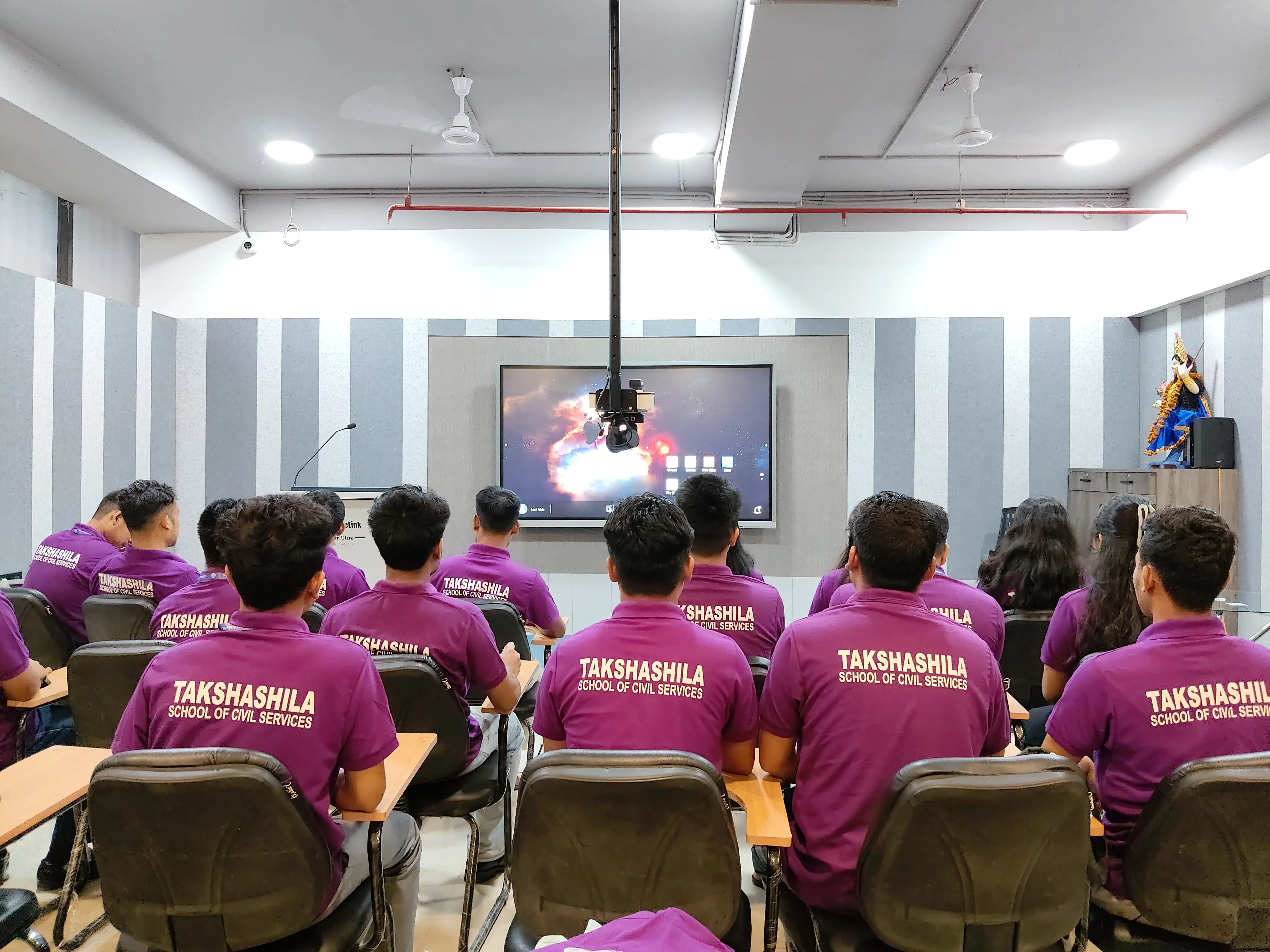
.png) Takshasheela School of Civil Services
Takshasheela School of Civil ServicesAn overview of the major government exam pathways available to graduates in India, along with what each one demands from an aspirant
For most graduates considering a career in the public sector, the sheer number of government exams available can make it difficult to decide where to focus preparation effort. Each exam differs not only in eligibility and pattern but also in the nature of work, career growth, and long-term stability it offers. This guide walks through the major categories of government exams open to graduates in India, along with the key details every aspirant should know before choosing a path.
1. UPSC Civil Services Examination
The Civil Services Examination conducted by the Union Public Service Commission is widely regarded as the most prestigious government exam in India, leading to services such as the Indian Administrative Service, Indian Police Service, Indian Foreign Service, and various other Group A and Group B central services. The exam is conducted in three stages: a Preliminary examination, a Main examination, and a Personality Test, and covers an extensive syllabus spanning History, Geography, Polity, Economy, Science and Technology, Ethics, and an optional subject.
This exam demands a long-term preparation commitment, typically spanning one to two years or more, and suits graduates who are prepared for sustained, in-depth study across a wide range of subjects.
2. State Public Service Commission Exams
Every state in India conducts its own Combined Competitive Examination through its respective Public Service Commission, such as the Assam Public Service Commission (APSC), for state-level administrative, police, and allied services. These exams follow a structure similar to UPSC, with Preliminary, Main, and Interview stages, but place significant emphasis on state-specific History, Geography, Culture, and current affairs.
State PSC exams are particularly well suited to graduates who wish to serve within their home state and who can dedicate focused preparation to the state-specific components that often decide the final outcome in these exams.
3. SSC CGL and Other Staff Selection Commission Exams
The Staff Selection Commission conducts several major exams for graduates, the most prominent being the Combined Graduate Level (CGL) examination, which recruits for a wide range of Group B and Group C posts in various central government ministries, departments, and organizations, including roles such as Income Tax Inspector, Assistant Audit Officer, and Central Excise Inspector.
SSC exams are conducted in multiple tiers, generally combining objective-type papers on Quantitative Aptitude, Reasoning, English, and General Awareness, followed by a skill test or descriptive paper depending on the specific post. These exams are known for a comparatively shorter preparation timeline and a syllabus that rewards speed and accuracy in objective testing.
4. Banking Sector Exams: IBPS and SBI
The banking sector offers a large number of graduate-level opportunities through exams conducted by the Institute of Banking Personnel Selection (IBPS) and the State Bank of India (SBI), for posts such as Probationary Officer (PO) and Clerk across public sector banks. These exams typically involve a Preliminary examination, a Main examination, and, for PO-level posts, a Group Discussion and Interview stage.
The syllabus generally covers Quantitative Aptitude, Reasoning, English Language, General and Banking Awareness, and Computer Knowledge. Banking exams are especially popular among graduates seeking relatively quicker recruitment cycles compared to civil services exams, along with strong career growth within the banking sector.
5. Railway Recruitment Board (RRB) Exams
The Railway Recruitment Board conducts several exams for graduate-level posts in Indian Railways, including RRB NTPC (Non-Technical Popular Categories), which covers posts such as Station Master, Goods Guard, and various clerical and commercial roles. These exams generally follow a multi-stage format with Computer-Based Tests, followed by skill tests or document verification depending on the specific post.
Railway exams attract a very large number of applicants due to the scale of vacancies and the appeal of long-term job security, making them a strong option for graduates comfortable with intense competition on largely objective-type papers.
6. Combined Defence Services (CDS) Examination
Conducted by UPSC, the Combined Defence Services examination recruits graduates into the Indian Military Academy, Indian Naval Academy, Air Force Academy, and Officers Training Academy. The written examination covers English, General Knowledge, and Elementary Mathematics (for certain academies), followed by an SSB (Services Selection Board) interview process that assesses leadership qualities, physical fitness, and overall officer-like personality traits.
This path suits graduates specifically interested in a career as a commissioned officer in the Indian Armed Forces and who are prepared for the distinct SSB selection process alongside the written exam.
7. Insurance Sector Exams: LIC and General Insurance
Public sector insurance companies such as the Life Insurance Corporation of India (LIC) and various General Insurance companies conduct their own recruitment exams for posts including Assistant Administrative Officer (AAO) and Apprentice Development Officer. These exams follow a pattern broadly similar to banking exams, testing Reasoning, Quantitative Aptitude, English, and General Awareness, along with domain-specific knowledge for certain specialist posts.
Insurance sector jobs are a strong alternative for graduates interested in a stable, office-based government career with a slightly different work profile compared to core banking roles.
8. Public Sector Undertaking (PSU) Exams
Many Public Sector Undertakings, including organizations in sectors such as oil and gas, power, and engineering, recruit graduates and engineering graduates through their own competitive exams or through scores from the GATE (Graduate Aptitude Test in Engineering) examination. These roles typically offer strong compensation packages compared to many other government exam categories, along with structured long-term career progression within the respective organization.
This path is particularly relevant for engineering graduates, since a large share of PSU recruitment is technical in nature and tied closely to specific engineering disciplines.
9. Teaching Eligibility Exams: CTET, State TET, and UGC NET
Graduates interested in a teaching career in government schools or colleges have dedicated eligibility exams available, including the Central Teacher Eligibility Test (CTET) and various State Teacher Eligibility Tests for school-level teaching positions, and the UGC NET for eligibility as Assistant Professor or for Junior Research Fellowship at the college and university level.
These exams generally test subject knowledge along with pedagogy and child development concepts (for CTET and State TETs), and are a well-defined path for graduates and postgraduates specifically inclined toward education as a career.
10. Judicial Services Examinations
Law graduates have the option of appearing for Judicial Services Examinations conducted by individual state Public Service Commissions or High Courts, which recruit for the post of Civil Judge (Junior Division) and similar entry-level judicial positions. These exams typically include a Preliminary examination, a Main examination covering law subjects in depth, and a Viva Voce (interview) stage.
This path is exclusively relevant to law graduates and offers a direct entry route into the judiciary, distinct from the litigation or corporate legal career paths generally pursued by law graduates.
11. How to Choose the Right Exam for You
With so many options available, graduates should evaluate a few key factors before committing preparation time to any single exam or a specific combination of exams:
- Eligibility fit: Confirm that your educational qualification, age, and any specific eligibility conditions genuinely match the exam's requirements.
- Preparation timeline: Some exams, like UPSC CSE, demand a long-term commitment, while others, like SSC and banking exams, generally involve shorter preparation cycles.
- Nature of the work: Consider whether you are drawn to administrative, technical, defence, banking, teaching, or judicial work, since the day-to-day nature of these roles differs significantly.
- Overlapping syllabus: Several exams share substantial portions of their syllabus, particularly General Awareness, Reasoning, and Quantitative Aptitude, allowing many aspirants to prepare for more than one exam category simultaneously in the early stages.
- Career growth and stability: Compare long-term career progression, job security, and compensation structures across the exams you are considering before finalizing your primary focus.
12. Final Thoughts
There is no single "best" government exam for every graduate; the right choice depends on individual eligibility, interests, and long-term career goals. Many successful candidates begin by building a strong general foundation in Reasoning, Quantitative Aptitude, English, and General Awareness, which remains useful across several exam categories, before narrowing their focus toward one or two specific exams that align closely with their strengths and career aspirations. A clear-eyed evaluation of your own priorities, combined with realistic awareness of each exam's demands, is the most reliable starting point for choosing the right path.
This guide is intended as a general overview for graduates exploring government exam options in India and should be read alongside the official notifications and syllabi published by the respective conducting bodies.
Comments (0)
No comments yet. Be the first to comment.