

HOW UPSC AND APSC ASPIRANTS CAN USE AI SMARTLY: A PRACTICAL GUIDE
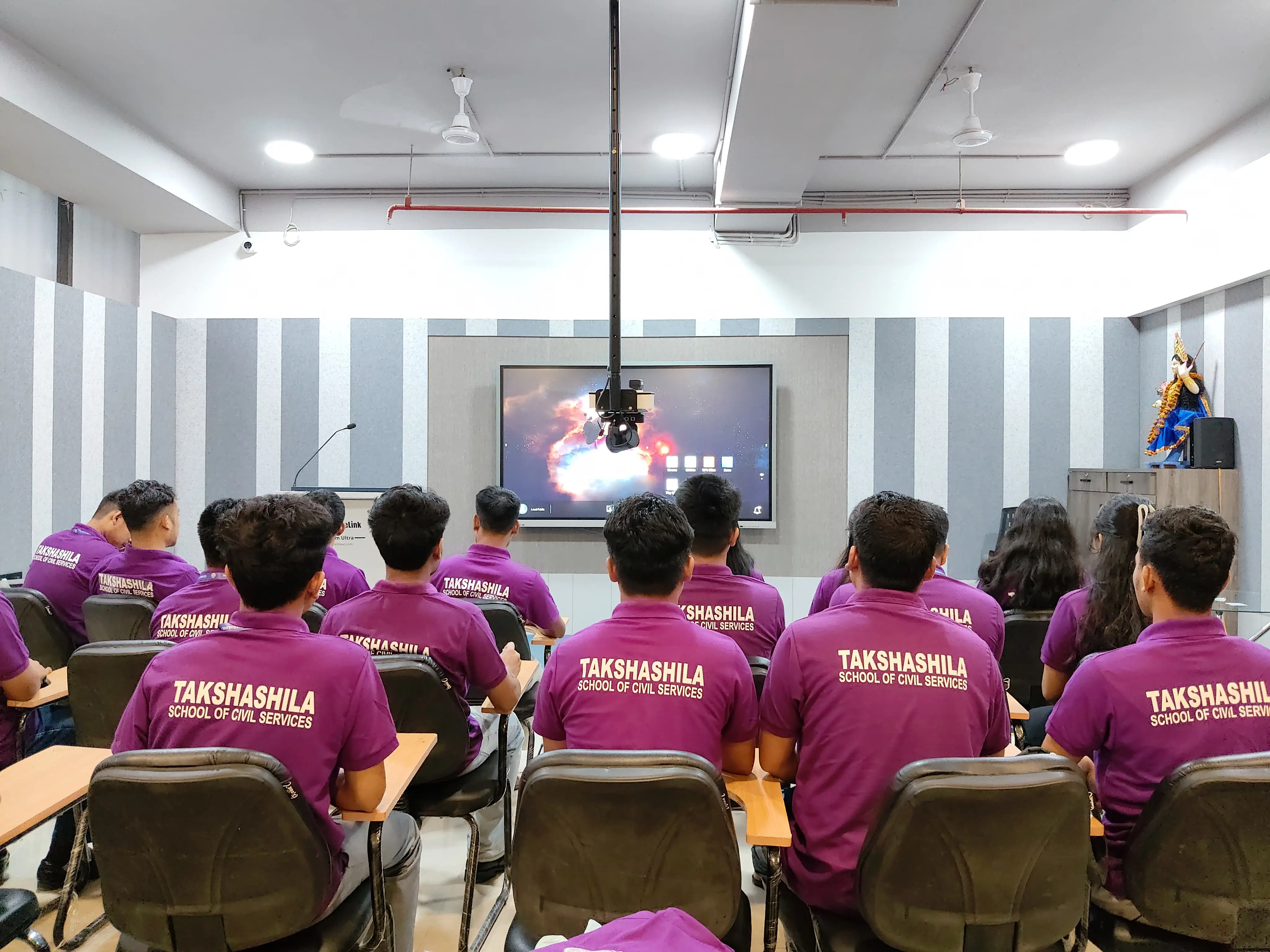
 Takshasheela School of Civil Services
A practical look at where AI genuinely helps UPSC and APSC preparation, and where it can quietly work against you
Artificial intelligence tools have become a common part of daily life for students, and competitive exam aspirants are no exception. Used well, these tools can save hours of preparation time and sharpen how you study. Used carelessly, they can create a false sense of mastery, introduce factual errors into your notes, or quietly weaken the very skills UPSC and APSC are designed to test. This guide walks through specific, practical ways aspirants can use AI intelligently, along with the precautions that matter most.
1. Why AI Needs to Be Used Deliberately, Not Casually
UPSC and APSC do not simply test whether you know facts; they test whether you can understand, connect, and communicate them under pressure, in your own words, within a fixed time limit. AI can help you get there faster, but only if you use it to build your own understanding rather than to substitute for it. The aspirants who benefit most from AI tools treat them as a study partner for specific, well-defined tasks, not as a shortcut around the actual work of learning.
2. Getting Quick Conceptual Clarity
When a textbook explanation of a concept feels dense or unclear, AI tools can be genuinely useful for getting a simpler, alternative explanation before returning to your standard source material.
- Ask for a concept to be explained in plain language, or with a simple analogy, when a textbook's explanation is too technical or assumes prior knowledge you do not yet have.
- Use AI to break down a complex process, such as the passage of a bill or an administrative procedure, into clear, sequential steps.
- Treat the AI's explanation as a starting point for understanding, then return to your primary source material to confirm the details and build lasting familiarity with the standard terminology used in the exam.
3. Summarizing and Organizing Current Affairs
Current affairs preparation generates a large volume of reading material every month, and AI tools can help condense and organize this material more efficiently than manual summarization alone.
- Use AI to summarize a long news article or government press release into a few key points you can add to your current affairs notes.
- Ask for a topic-wise or category-wise grouping of current affairs you have collected over a week or month, such as schemes, appointments, or international relations, to make revision more structured.
- Always cross-check summarized facts, particularly dates, figures, and names, against the original source before adding them to your notes, since summarization can occasionally drop or alter important details.
4. Improving Mains Answer Writing
Answer writing is one of the areas where AI can add genuine value, not by writing your answers for you, but by helping you evaluate and refine answers you have written yourself.
- Write your answer independently first, under timed conditions, exactly as you would in the actual exam.
- Ask AI to review your answer for structure, clarity, and whether it directly addresses what the question asked, rather than asking it to write or heavily rewrite the answer for you.
- Use AI feedback to identify recurring weaknesses in your own answer-writing pattern, such as weak introductions, insufficient examples, or unclear conclusions, and work on correcting these specifically over subsequent practice.
- Be cautious of relying on AI-generated "model answers" as a template to memorize, since exam evaluators are trained to recognize generic, templated responses that lack genuine analytical depth.
5. Building Quick Revision Tools
AI tools can help convert your own notes into formats that are faster to revise, particularly useful in the final weeks before an exam when time is limited.
- Ask AI to convert a dense block of your own notes into a structured table or a set of flashcards for quicker revision.
- Generate short self-test questions based on a topic you have just studied, as a quick way to check recall immediately after reading.
- Use AI to create simple comparison tables, such as between similar schemes, historical dynasties, or constitutional provisions, when your source material presents this information in a way that is hard to compare at a glance.
6. Doubt Clearing and Filling Understanding Gaps
When a specific doubt arises during self-study and a mentor or peer is not immediately available, AI can serve as a quick first point of clarification, provided the answer is later verified.
- Use AI to get an initial explanation for a specific doubt, then verify the answer against a standard reference source, especially for anything you plan to write in an exam.
- Ask follow-up questions to understand not just what the answer is, but why it is correct, since this deeper understanding is what actually helps during Mains answer writing and the interview stage.
- For static, factual doubts, particularly around dates, numbers, or names, treat AI's answer as a lead to verify rather than a final, exam-ready fact.
7. Analyzing Your Own Mock Test Performance
Beyond generating practice material, AI can help you make sense of your own performance data in ways that are harder to do manually, particularly when tracking patterns across many mock tests over time.
- Log your mock test scores and error types over time, and ask AI to help identify patterns, such as a subject or question type where errors consistently recur.
- Use AI to help you prioritize revision based on these identified patterns, rather than revising the entire syllabus equally regardless of where your actual weaknesses lie.
- Periodically reassess these patterns as your preparation progresses, since areas of weakness typically shift over the course of a long preparation timeline.
8. Preparing for the Interview Stage
AI can be a useful practice partner for interview preparation, particularly for structuring your thoughts on common question areas well before the actual Personality Test.
- Use AI to generate likely interview questions based on details from your own DAF, such as your academic background, hobbies, or work experience, and practice framing honest, concise responses.
- Ask AI to help you think through different perspectives on a current affairs topic likely to come up in the interview, so you can form and articulate your own considered view rather than a one-sided answer.
- Practice your actual spoken responses with a mentor, peer group, or mock interview panel wherever possible, since AI cannot replicate the real pressure, body language cues, and follow-up questioning of an actual interview board.
9. What to Avoid When Using AI for Preparation
- Do not treat AI as a primary source for static facts: AI tools can occasionally produce inaccurate dates, figures, or names, and repeating an error confidently in the exam can cost marks; always verify factual claims against standard reference material, especially for Assam-specific content, which is more likely to be thinly covered or inconsistently represented in general-purpose AI training data.
- Do not let AI write your Mains answers or essays for you: Beyond being counter to the purpose of preparation, this weakens the exact analytical and writing skills the exam and interview are designed to assess, and evaluators are generally able to spot generic, non-personal writing.
- Do not skip primary source reading in favor of AI summaries alone: Summaries are useful for efficiency, but depth of understanding, the ability to connect concepts across the syllabus, and comfort with nuance still require direct engagement with standard books and official material.
- Do not over-rely on AI for current affairs without cross-verification: Since current developments change rapidly, always confirm recent facts against a reliable news source rather than relying solely on an AI tool's response.
- Do not use AI-generated content in a way that resembles unoriginal or copied material in written practice: Since Mains answers demand your own articulation and perspective, practicing primarily with AI-written content can leave your own writing style underdeveloped by the time the actual exam arrives.
10. Building a Balanced, Sustainable Approach
The most effective way to use AI in UPSC or APSC preparation is as a supporting tool layered on top of solid, traditional study habits, not as a replacement for them. Use it to save time on repetitive or organizational tasks, to get quick clarity on a difficult concept, or to get structured feedback on your own work, while keeping the core activities of reading, understanding, writing, and revising firmly in your own hands. This balance allows you to benefit from genuine efficiency gains without eroding the depth of preparation that both stages of the exam, and eventually the interview, are designed to test.
11. Final Thoughts
AI tools, used with clear intent and appropriate verification, can meaningfully support UPSC and APSC preparation, particularly for conceptual clarity, note organization, answer-writing feedback, and revision efficiency. The aspirants who benefit most are those who remain the primary drivers of their own preparation, using AI to sharpen and speed up specific tasks rather than to bypass the genuine effort of learning, writing, and thinking that these exams are ultimately designed to reward.
This guide is intended as a general reference for UPSC and APSC aspirants exploring how AI tools can support their preparation, and should be used alongside standard study material and official sources.
Comments (0)
No comments yet. Be the first to comment.