

How to Prepare General Knowledge for ADRE
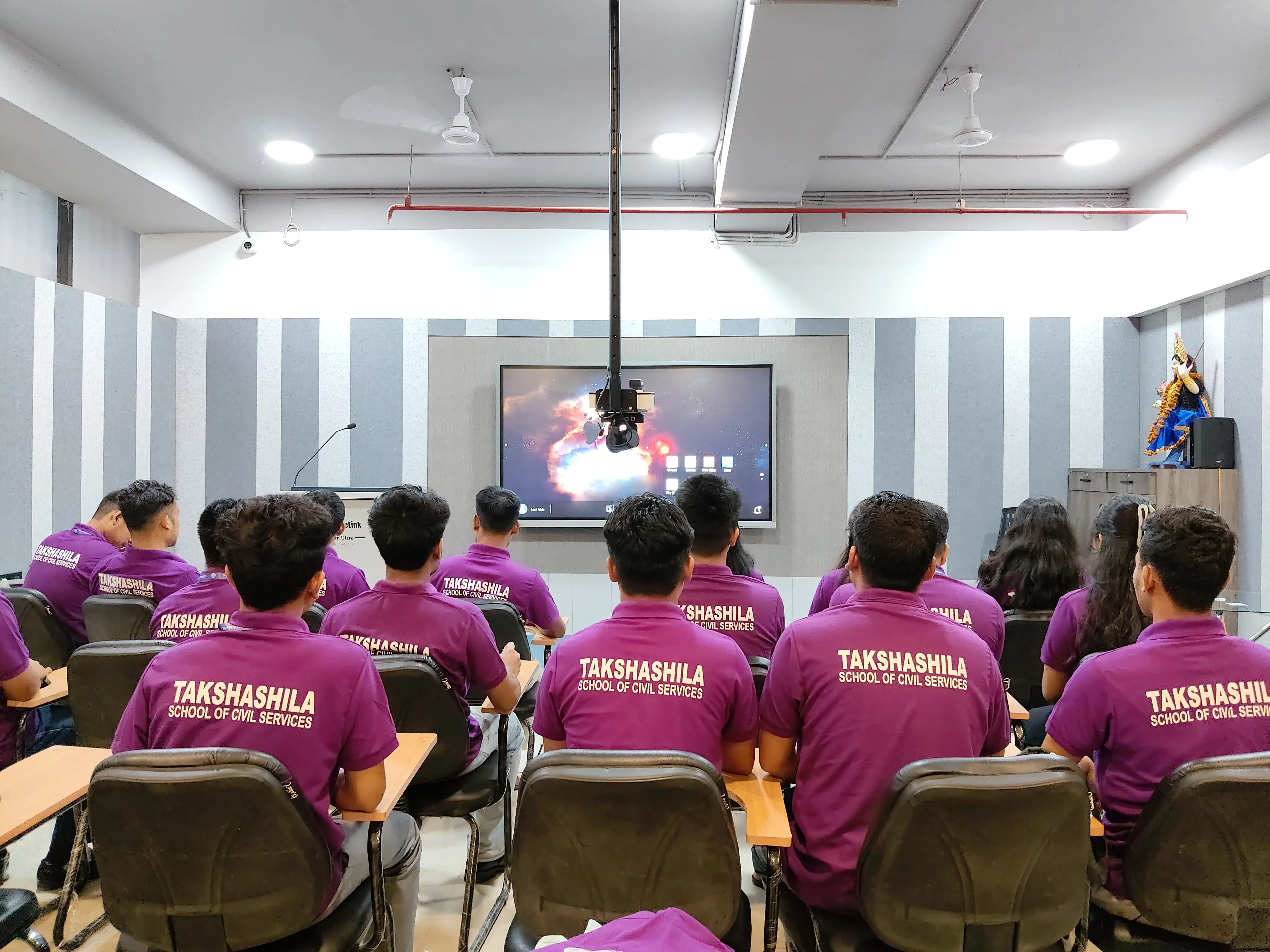
.png) Takshasheela School of Civil Services
Takshasheela School of Civil Services
A focused approach to building and retaining the General Knowledge needed to clear ADRE with confidence
General Knowledge is one of the most heavily weighted and consistently tested sections across nearly every post category in the Assam Direct Recruitment Examination, from Grade IV to Grade III posts. Unlike sections such as Reasoning or Quantitative Aptitude, which improve primarily through practice, General Knowledge preparation depends on the breadth and organization of what you read, making it a section where a clear strategy matters as much as effort. This guide lays out a structured approach to preparing General Knowledge specifically for ADRE.
1. Understand the Scope of the GK Section
Before starting preparation, read the official ADRE syllabus and previous years' question papers carefully to understand exactly what falls under the General Knowledge section for your specific post and grade. In general, ADRE's GK component draws from a combination of static general knowledge, Assam-specific knowledge, and current affairs, with the exact proportion varying somewhat by post category.
Treating GK as a single, undifferentiated subject often leads to unfocused reading. It is more useful to break it down into distinct sub-areas, each requiring a slightly different preparation approach, as covered in the sections below.
2. Prioritize Assam-Specific General Knowledge
Since ADRE is a state-level exam, Assam-specific General Knowledge consistently carries the highest weightage and is also the area where many aspirants under-prepare due to over-reliance on generic, national-level GK books. This makes it the single most valuable area to prioritize. Focus your reading on:
- Assam History, including the Ahom period, key rulers and battles, the Neo-Vaishnavite movement, the freedom movement in Assam, and post-independence developments such as the Assam Movement and Assam Accord.
- Assam Geography, including rivers, mountain ranges, districts, national parks and wildlife sanctuaries, and major agricultural and industrial regions.
- Assamese culture, festivals, traditional art forms, literature, and prominent personalities from the state in fields such as literature, music, sports, and public life.
- The state's administrative structure, government schemes, important government institutions, and recent developments in state governance.
Use a dedicated Assam-specific GK book or compilation rather than relying solely on national-level general knowledge material, since this ensures depth and accuracy in an area where generic sources are often thin.
3. Build a Strong Base in Static General Knowledge
Static GK refers to facts that do not change over time, such as historical events, geographical features, constitutional provisions, and scientific facts. This forms the backbone of the national-level portion of the GK section and should be built systematically rather than picked up haphazardly.
- Indian History: Focus on major events, movements, and personalities from the Ancient, Medieval, and Modern periods, particularly the Indian freedom struggle.
- Indian and World Geography: Cover physical geography, major rivers and mountain ranges, and important geographical facts about India and the world.
- Indian Polity: Build familiarity with the basic structure of the Constitution, fundamental rights and duties, and the functioning of the union and state governments.
- General Science: Revise basic scientific facts and concepts typically covered at the school level, along with important scientific discoveries and terminology.
- Important static facts: National symbols, important days, awards, sporting events, and similar frequently tested static information.
A single, well-reviewed static GK book, read multiple times, is generally more effective than switching between several sources in search of more complete coverage.
4. Build a Consistent Current Affairs Habit
Current affairs questions in ADRE typically draw from developments in the months leading up to the exam, both at the national level and, importantly, at the Assam state level. Since current affairs accumulate over time, starting this habit early and maintaining it consistently is far more effective than attempting to cover months of news in a rushed manner close to the exam.
- Read a reliable daily newspaper or a concise daily current affairs digest, focusing on government schemes, appointments, awards, sporting achievements, and major national and state events.
- Pay particular attention to Assam-specific current affairs, including state government schemes, appointments to key state positions, and developments concerning Assam covered in national news.
- Maintain monthly current affairs notes organized by category, such as schemes, appointments, and awards, rather than as an unorganized day-by-day log, so revision closer to the exam is efficient.
5. Organize Your Notes for Quick Revision
Because General Knowledge involves a large volume of discrete facts rather than interconnected concepts, how you organize your notes has a direct impact on how effectively you can revise them in the weeks before the exam.
- Maintain separate, clearly labeled sections for Assam-specific GK, static GK, and current affairs, rather than mixing them into a single continuous set of notes.
- Use short, fact-based note formats, such as bullet points or simple tables, rather than long descriptive paragraphs, since GK revision depends on quick recall rather than deep conceptual understanding.
- Create quick-reference lists for commonly tested categories, such as important dates, key personalities, government schemes, and geographical facts, which are easy to revise repeatedly in short sessions.
6. Use Previous Years' Papers to Identify Patterns
Previous years' ADRE papers, along with papers from similar state-level exams, are one of the most reliable tools for understanding exactly which GK topics are tested repeatedly and at what level of difficulty. Analyzing these papers helps direct your limited preparation time toward the areas most likely to yield results.
- Solve previous years' papers topic-wise to identify which categories within GK, such as Assam History or current affairs, are tested most frequently.
- Note recurring question patterns and commonly tested facts, and ensure these specific areas are thoroughly covered in your notes.
- Use previous papers periodically throughout your preparation, not only in the final revision phase, so that your ongoing study remains aligned with actual exam trends.
7. Build a Regular Revision Cycle
General Knowledge is particularly prone to being forgotten if not revised regularly, since it consists largely of discrete facts rather than logically connected concepts that are easier to reconstruct from first principles. A fixed revision cycle is essential to retain what you have studied.
- Revise recently studied GK topics within a day or two of first covering them, since this significantly improves long-term retention.
- Set aside a fixed weekly slot to revise the GK material covered over the preceding week.
- In the final weeks before the exam, shift almost entirely to revision of existing notes and quick-reference lists rather than introducing substantial new content.
8. Practice With Timed Mock Tests
Since ADRE is an objective, time-bound exam, practicing GK questions under timed conditions helps build the speed and accuracy needed on exam day, in addition to reinforcing content retention through active recall.
- Take regular sectional GK tests to assess how well you can recall and apply what you have studied under time pressure.
- Include full-length mock tests periodically to practice managing time across the GK section alongside other sections in the paper.
- Review incorrect answers carefully after each test to determine whether the gap was due to not knowing the fact at all, confusing it with a similar fact, or simple carelessness, and address each type of error differently in your revision.
9. Common Mistakes to Avoid
- Relying only on generic national-level GK books: This leaves the high-weightage Assam-specific portion under-prepared, costing marks that are otherwise easy to secure.
- Reading without organized notes: Without structured notes, revising the large volume of GK facts becomes inefficient and incomplete as the exam approaches.
- Postponing current affairs until the final weeks: This creates an unmanageable backlog and results in incomplete coverage of recent developments.
- Neglecting revision in favor of only reading new material: GK facts fade quickly without repeated revision, making a fixed revision cycle essential rather than optional.
- Ignoring previous years' papers: Skipping this step means missing clear signals about which GK topics and formats are tested most frequently in ADRE.
10. Final Tips
General Knowledge preparation for ADRE rewards a structured, organized approach far more than sheer volume of reading. Prioritize Assam-specific content given its consistently high weightage, build a strong static GK base using a single reliable source, maintain a steady current affairs habit from early in your preparation, and revise consistently using well-organized notes. Combined with regular practice from previous years' papers and timed mock tests, this approach builds the kind of quick, accurate recall that the GK section of ADRE demands on exam day.
This guide is intended as a general reference for ADRE aspirants and should be read alongside the official ADRE notification and syllabus published for the applicable recruitment cycle and post.
Comments (0)
No comments yet. Be the first to comment.