
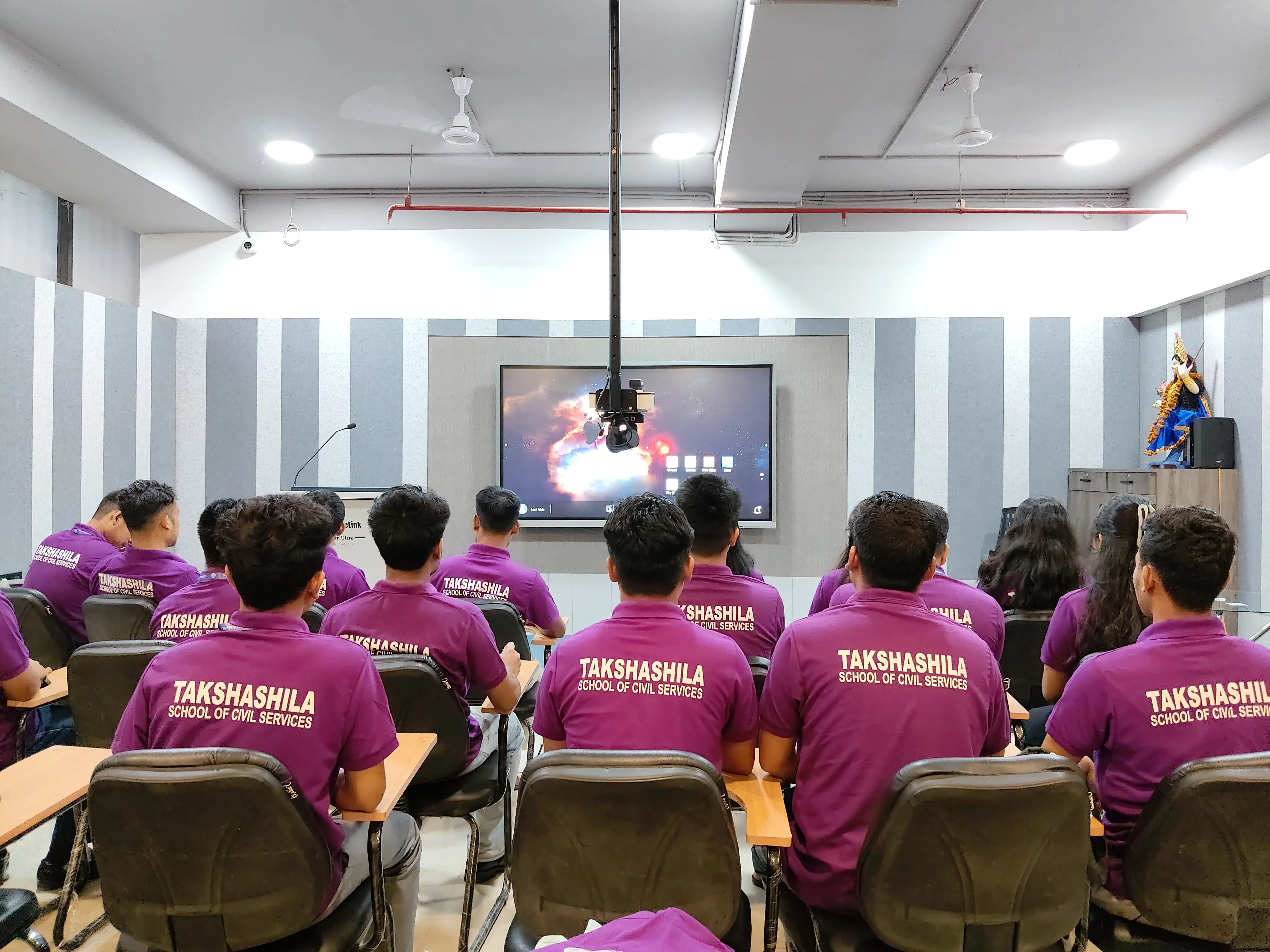

How to Prepare for APSC CCE: A Complete Beginner's Guide
.png) Takshasheela School of Civil Services
Takshasheela School of Civil ServicesA step-by-step roadmap for first-time aspirants preparing for the Assam Public Service Commission Combined Competitive Examination
The APSC Combined Competitive Examination (CCE) is the gateway to some of the most respected administrative and allied services in Assam, including Assam Civil Service, Assam Police Service, and several other Group A and Group B posts. For a first-time aspirant, the sheer scale of the syllabus and the multi-stage structure of the exam can feel overwhelming. This guide breaks the entire process down into clear, manageable steps so that a beginner can start preparing with confidence and direction.
1. Understanding APSC CCE: The Three Stages
Before opening a single book, every beginner should understand the exact structure of the exam. APSC CCE is conducted in three stages, and each stage tests a different skill set.
| Stage | Nature | Purpose |
|---|---|---|
| Preliminary Examination | Objective, two papers (General Studies I and II, CSAT-type) | Screening stage; marks are not counted in the final merit |
| Main Examination | Descriptive, multiple papers including General Studies, Assamese/English, and an optional subject | Tests depth of knowledge and answer-writing ability; marks count fully toward merit |
| Personality Test (Interview) | Oral, board-based | Assesses suitability, awareness, and communication for administrative roles |
Because Prelims marks do not count toward the final rank, treat Prelims strictly as a qualifying hurdle and direct your deeper, long-term preparation effort toward Mains from the very beginning.
2. Eligibility Criteria
Before committing years of effort, confirm that you meet the basic eligibility requirements published in the official APSC CCE notification for the relevant year. As a beginner, keep these three checks in mind:
- Educational qualification: A bachelor's degree from a recognized university is the standard minimum requirement for most posts under CCE.
- Age limit: The general age bracket, along with relaxations for reserved categories, is specified separately in each year's notification and should always be verified from the current official advertisement rather than assumed from previous years.
- Domicile and category-specific conditions: Certain posts carry residency or category-based conditions, so read the eligibility section of the notification carefully before applying.
Always cross-check eligibility details directly from the official APSC notification for the specific recruitment cycle you are applying under, since minor changes are made from year to year.
3. Getting Familiar with the Syllabus
A common beginner mistake is picking up random books before reading the syllabus even once. Before buying a single book, read the official APSC CCE syllabus for Prelims and Mains from start to finish, and keep a printed or saved copy on hand throughout your preparation.
Broadly, the General Studies portion covers History (with a strong Assam History component), Geography (India and Assam), Indian Polity and Governance, Economy, Science and Technology, Environment and Ecology, and Current Affairs. In addition, Mains requires a qualifying language paper and one optional subject chosen from a list provided by the Commission.
Treat the syllabus as your master checklist. Every topic you study should be traceable to a specific line in the syllabus; this discipline prevents both over-preparation on low-priority areas and gaps in high-priority ones.
4. Choosing Your Optional Subject
The optional subject is one of the most consequential early decisions a beginner makes, since it will occupy a significant share of Mains preparation time. Consider the following factors before finalizing your choice:
- Background familiarity: A subject connected to your graduation background usually reduces the time needed to build a base, though it is not mandatory to choose within your academic field.
- Availability of study material: Some optional subjects have well-developed, easily available study material and past-year trends, while others are harder to prepare for due to scarce resources.
- Overlap with General Studies: Subjects such as Geography, History, or Public Administration often overlap meaningfully with the General Studies papers, giving you double value for the same preparation hours.
- Personal interest: Sustained motivation over many months of preparation is easier to maintain in a subject you genuinely find engaging.
Once chosen, avoid switching optional subjects midway unless absolutely necessary, since every subject switch effectively resets a significant portion of your preparation timeline.
5. Building Your Foundation
For a true beginner, the first few months should be spent building a solid conceptual base rather than jumping directly into advanced reference books or solving question papers. A practical approach is as follows:
- Start with NCERT or SCERT-level textbooks for History, Geography, Polity, and Economy to build basic clarity before moving to advanced texts.
- Move on to Assam-specific material for Assam History, Assam Geography, and the state's administrative and constitutional position, since this component is unique to APSC and carries significant weightage.
- Introduce standard reference books gradually, one subject at a time, rather than attempting to read everything simultaneously.
- Maintain concise, handwritten or digital notes as you go, since these notes become your primary revision material in the final months before the exam.
6. Current Affairs and Newspaper Reading
Current affairs form a significant and growing portion of both Prelims and Mains, and this is an area beginners often postpone until too late. Build the habit early:
- Read one national daily newspaper regularly, focusing on editorial and opinion sections rather than every news item.
- Follow state-level news closely, particularly developments related to Assam's government schemes, policies, and administrative changes, since these are frequently tested.
- Maintain monthly current affairs notes organized by subject rather than by date, so that revision before the exam is organized thematically.
- Revisit current affairs notes periodically rather than only reading once, since static-plus-current affairs linkage questions are increasingly common.
7. A Beginner's Study Plan
While every aspirant's schedule differs based on working hours and personal commitments, a beginner can follow this general phased approach:
- Phase 1 (Months 1-3): Build foundational understanding across all General Studies subjects using basic-level books; simultaneously begin optional subject basics and start daily newspaper reading.
- Phase 2 (Months 4-6): Move to standard reference books for each subject, start making structured notes, and begin solving previous years' Prelims and Mains questions topic-wise.
- Phase 3 (Months 7-9): Focus on answer writing practice for Mains, deepen optional subject preparation, and begin regular revision cycles of notes already made.
- Phase 4 (Final months before exam): Shift almost entirely to revision, mock tests, and timed practice, minimizing the introduction of new material.
This phased structure is a general guide and should be adjusted based on how much time remains before your target exam cycle and how many hours per day you can realistically dedicate.
8. Answer Writing Practice for Mains
Since Mains marks determine the final merit, answer writing skill is just as important as content knowledge. Beginners should start practicing this skill early rather than waiting until a few months before the exam.
- Practice writing answers within the actual time limits of the exam to build speed alongside accuracy.
- Structure every answer with a brief introduction, a well-organized body using sub-headings or points where appropriate, and a short conclusion.
- Use diagrams, flowcharts, or simple maps wherever they can convey information more efficiently than text, particularly for Geography and Economy answers.
- Get your answers reviewed periodically, whether by a mentor, peer group, or coaching institute, since self-assessment alone often misses structural or presentation gaps.
9. Preparing for the Interview Stage
The Personality Test is often underestimated by beginners since it comes after two demanding written stages. However, meaningful interview preparation should begin well before you actually clear Mains.
- Be thoroughly familiar with your own application form (DAF), since a large share of interview questions are drawn directly from your educational background, work experience, and stated hobbies.
- Stay updated on current affairs, particularly issues concerning Assam and the Northeast, government policies, and any subject connected to your academic or professional background.
- Practice mock interviews to build comfort with structured, concise, and honest responses under a formal panel setting.
- Work on clear communication and body language, since the interview evaluates overall personality and presence, not just factual knowledge.
10. Common Mistakes Beginners Make
- Collecting too many books: Owning multiple books for the same subject often leads to fragmented, shallow reading. Choose one or two reliable sources per subject and revise them thoroughly instead.
- Delaying answer writing practice: Waiting until a few weeks before Mains to start writing answers leaves too little time to correct structural weaknesses.
- Ignoring the Assam-specific portion: Since this content is unique to APSC, under-preparing it costs marks that competitors with focused state-specific preparation will capture.
- Studying without revision cycles: Reading a topic once and moving on without scheduled revision leads to poor retention by the time the exam arrives.
- Neglecting the optional subject after the initial months: Since optional subject papers carry significant weightage in Mains, sustained attention throughout the preparation period is necessary, not just in the early phase.
11. Final Tips to Stay Consistent
APSC CCE preparation is a long-term effort, often spanning a year or more from the foundational stage to the final interview. Consistency matters more than intensity in the early months, so beginners should aim to build sustainable daily habits rather than short bursts of intense but unsustainable study. Track your progress against the syllabus regularly, revise on a fixed schedule rather than an ad hoc one, and treat previous years' question papers as a continuous guide to where your effort should be directed at every stage of preparation.
Starting with a clear understanding of the exam structure, a disciplined foundation-building phase, and early answer-writing practice gives a beginner a genuine head start over those who begin preparation without a plan. The path is demanding, but a structured approach makes it entirely manageable.
This guide is intended as a starting reference for first-time APSC CCE aspirants and should be read alongside the official APSC notification and syllabus for the applicable examination cycle.
Comments (0)
No comments yet. Be the first to comment.