

Complete Guide to ADRE Preparation
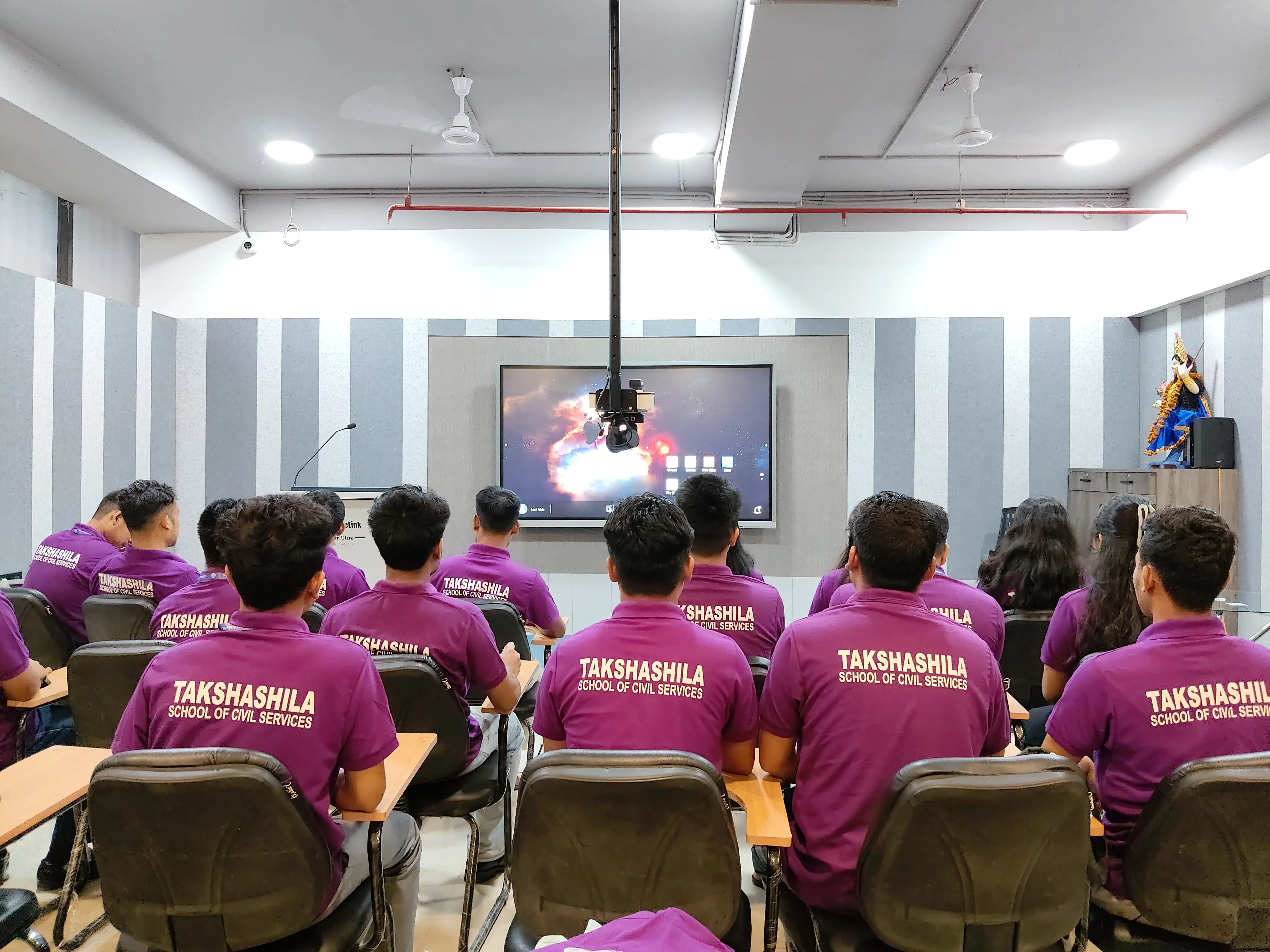
.png) Takshasheela School of Civil Services
Takshasheela School of Civil ServicesA structured roadmap for aspirants preparing for the Assam Direct Recruitment Examination across Grade III and Grade IV posts
The Assam Direct Recruitment Examination (ADRE) has become one of the most sought-after recruitment routes in the state, offering a single, standardized examination for filling a large number of Grade III and Grade IV posts across various government departments. Because ADRE combines a huge applicant pool with a relatively compact syllabus compared to exams like APSC CCE, competition is intense and preparation needs to be sharp, targeted, and well-paced. This guide walks through everything an aspirant needs to know to prepare systematically for ADRE.
1. What is ADRE
ADRE is conducted by the Government of Assam, primarily through the Assam Skill, Employment and Entrepreneurship Development Society and Assam Staff Selection Commission-linked processes, to fill vacancies in various Grade III (non-gazetted, technical and non-technical) and Grade IV posts across state government departments. Instead of each department conducting separate recruitment, ADRE consolidates a large share of these vacancies into a common examination process, which is then followed by department or post-specific document verification and, for certain posts, skill or physical tests.
Because a single exam can lead to placement across many different departments and post categories, ADRE attracts applicants from extremely diverse educational backgrounds, from higher secondary pass candidates for Grade IV posts to graduates and postgraduates for various Grade III posts.
2. Understanding the Exam Structure
ADRE is generally structured around objective-type, multiple-choice questions, and the exact composition can vary somewhat by grade and recruitment cycle. As a general framework, aspirants should be prepared for the following broad structure:
| Category | Typical Focus | Nature of Posts |
|---|---|---|
| Grade IV | General Knowledge, General English/Assamese, Elementary Mathematics, General Awareness of Assam | Peon, Attendant, Driver, and similar support-level posts |
| Grade III (Non-Technical) | General Studies, Assam History and Geography, Polity, Economy, Current Affairs, Reasoning, General English | Junior Assistant, Steno, LDA/UDA-equivalent, and similar clerical/administrative posts |
| Grade III (Technical) | Domain-specific subject knowledge combined with General Studies | Posts requiring a specific technical or professional qualification |
Always download and read the exact syllabus and exam pattern published in the official ADRE notification for the specific post and recruitment cycle you are applying under, since question distribution and marking schemes are announced separately for each cycle and can differ between grades and post categories.
3. Eligibility Criteria
Eligibility for ADRE varies significantly depending on the grade and specific post applied for. Before beginning preparation, confirm the following against the official notification:
- Educational qualification: Requirements range from a Class 10 or Class 12 pass for many Grade IV posts to a bachelor's or specific professional degree for various Grade III posts.
- Age limit: The general age bracket and applicable relaxations for reserved categories are specified separately in each notification.
- Post-specific requirements: Certain posts carry additional requirements such as computer proficiency certificates, typing speed, or specific technical qualifications.
Since ADRE covers a wide range of posts under one umbrella exam, always verify the exact eligibility criteria for the specific post code you are applying for rather than assuming uniform requirements across all posts.
4. Core Preparation Strategy
Because ADRE syllabus areas overlap substantially across different posts within the same grade, a well-organized aspirant can prepare efficiently for multiple posts simultaneously. The core strategy should center on these pillars:
- General Knowledge and Static GK: Build a strong base in Indian and world general knowledge, including history, geography, science, and important static facts frequently tested in objective exams.
- Assam-Specific Knowledge: Since ADRE is a state-level exam, questions on Assam's history, geography, culture, government schemes, and administrative structure carry substantial weightage and should never be treated as an afterthought.
- Current Affairs: Maintain regular coverage of national and Assam-specific current affairs, particularly government schemes, appointments, and events from the months leading up to the exam.
- Quantitative Aptitude and Reasoning: Practice elementary mathematics and logical reasoning regularly, since these sections are time-sensitive and improve significantly with consistent practice.
- General English or Assamese Language: Strengthen grammar, comprehension, and vocabulary basics, as language sections are a standard component across most ADRE post categories.
5. Building Strong Assam-Specific Knowledge
Assam-specific content is consistently one of the highest-scoring opportunities in ADRE for well-prepared candidates, precisely because many aspirants rely on generic, non-state-specific study material. Focus your preparation on these core areas:
- Assam History, including the Ahom period, freedom movement in Assam, and post-independence developments such as the Assam Movement and Assam Accord.
- Assam Geography, including physical features, rivers, districts, and administrative divisions.
- Assamese culture, festivals, literature, and prominent personalities from the state.
- Assam's government structure, key state government schemes, and recent state-level current affairs.
A dedicated Assam-specific source, rather than relying solely on national-level general knowledge books, is essential to cover this portion thoroughly.
6. A Structured Study Plan
Since ADRE preparation timelines are often shorter than exams like APSC CCE, a focused, time-bound plan works better than an open-ended approach. A general phased structure looks like this:
- Phase 1 (Foundation): Cover the full syllabus once at a basic level across all sections, using concise, exam-oriented material rather than exhaustive textbooks.
- Phase 2 (Depth and Practice): Deepen weaker sections, begin solving previous years' ADRE and similar state-level exam question papers, and start timed sectional practice.
- Phase 3 (Full-Length Practice): Take full-length mock tests under exam conditions, analyze mistakes carefully, and revise weak areas identified from test performance.
- Phase 4 (Final Revision): In the last two to three weeks, focus entirely on revising notes, formulas, and high-frequency static facts rather than introducing new material.
7. The Role of Mock Tests and Previous Papers
Because ADRE is an objective, time-bound exam, speed and accuracy under pressure matter as much as raw knowledge. Previous years' ADRE papers and full-length mock tests should form a central part of preparation, not an occasional add-on.
- Solve previous years' ADRE papers to understand the typical difficulty level, question style, and recurring topics across sections.
- Take regular full-length mock tests to build stamina, manage time across sections effectively, and reduce exam-day anxiety.
- After every mock test, spend time analyzing incorrect answers and identifying whether the error was due to a knowledge gap, a silly mistake, or poor time management, and address each type differently.
8. Time Management During the Exam
Given the objective, multiple-choice format and a fixed time limit, how you allocate time during the exam itself can be as important as your preparation level. Keep these practical points in mind:
- Attempt the sections you are strongest in first to secure quick, confident marks before moving to more time-consuming questions.
- Avoid getting stuck on any single difficult question for too long; mark it for review and move on, returning only if time permits.
- Be mindful of any negative marking rules specified in the notification, and avoid guessing randomly on questions you have no idea about.
- Practice attempting full mock tests within the exact time limit well before the actual exam, so that time-bound decision-making feels familiar rather than stressful.
9. Common Mistakes to Avoid
- Relying only on generic, non-Assam-specific material: This causes candidates to miss a substantial, high-scoring portion of the exam that requires state-specific preparation.
- Ignoring previous years' papers: Skipping this step means missing valuable insight into the actual difficulty level and recurring question patterns of ADRE.
- Ignoring the specific post's syllabus: Since ADRE covers many posts with slightly different syllabi, preparing from a generic syllabus without checking the exact notification for your applied post can leave gaps.
- Delaying mock test practice: Starting full-length timed practice too late leaves little room to correct time management issues before the actual exam.
- Neglecting revision in favor of constantly covering new material: Given the objective nature of the exam, quick and accurate recall from repeated revision matters more than exposure to excessive new content close to the exam date.
10. Final Tips for ADRE Aspirants
ADRE rewards focused, consistent, and exam-specific preparation more than broad, unfocused effort. Build a strong Assam-specific knowledge base, practice consistently with previous years' papers and full-length mock tests, and manage your revision cycles carefully so that what you learn early in your preparation is still fresh and readily recallable on exam day. Given the scale of competition, small gains in speed, accuracy, and Assam-specific knowledge often make the difference between qualifying and missing out by a narrow margin.
This guide is intended as a general reference for ADRE aspirants and should be read alongside the official ADRE notification and syllabus published for the applicable recruitment cycle and post.
Comments (0)
No comments yet. Be the first to comment.